Applications Now Open
Master's in Data Analytics and Policy (MS)
MS in Data Analytics and Policy Program Overview
The Johns Hopkins online MS in Data Analytics and Policy prepares students to tackle meaningful policy challenges using cutting-edge analytics.
Gain Practical Skills & Expand Your Knowledge
Students graduate from the program with the ability to develop actionable insights from diverse sets of data, as well as the communication skills needed to share your knowledge with decision-makers and the public.
The degree benefits career-switchers who are new to data analytics, as well as those seeking to level up their analytics skillset. Our faculty design the program to be accessible to students entering without an extensive mathematical, statistical, or computing background. Students take core classes covering foundational skills for policy-related data science, including statistics, research design, and programming for data analysis. Beyond the core, students select from a range of courses on policymaking, politics, and data science methods. With this skillset, graduates from the Data Analytics and Policy program may find themselves working in government agencies at the local, state, and federal level, with think tanks or nonprofit organizations, or in private sector firms adjacent to politics and policy.
Examples of core and elective courses include:
- Data Visualization
- Quantitative Methods
- Machine Learning Methods and Applications
- Policy, Technology and Innovation
- Expertise and Evidence in Policymaking
Learn on Your Terms
This 100% online data analytics and policy program offers a flexible schedule with start dates in the fall, spring, or summer. Attend full- or part-time and complete your degree in about two years. If you’re in the D.C. area, you’ll also have the option to join us on campus for a few electives.
In-Depth Articles
Why You Should Consider a Career in Data Analytics
Demand for data analysts is growing and skilled professionals have a host of pathways to advance in their field or break into a new one, contributing to organizations large and small across many industries and fields.
Master’s in Data Analytics and Policy Related Events

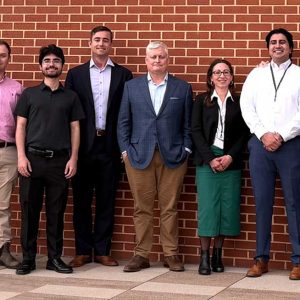
Maria Battle '19 Data Scientist with the Johns Hopkins University Applied Physics LaboratoryThe program prepared me for the many facets of data science work. It was a great choice. I learned how to design research plans and scope complex data projects.
Why to Pursue an MS in Data Analytics and Policy

Customize Your Curriculum
Students may choose to organize their studies in one of three optional focus areas: Data Science and Quantitative Research Methods; Politics, Policy Analysis, and Public Management; or Geospatial Analysis

Top-Tier Faculty and Seasoned Practitioners
You will learn from faculty members who are top scholars and researchers in their field, as well as from practicing data scientists, risk management consultants, policy analysts, software developers, and other data and policy professionals.

Prime Location to Learn and Work
Washington, D.C. is an ideal place for data and policy analysts. Every federal government agency, from the CIA to the EPA, is expanding its analytical capacity. Because AAP is based here, you’ll have access to a faculty with real-world experience at top agencies and policy organizations.

Center for Data Analytics, Policy, and Government
Our mission, to provide a strong foundation of knowledge upon which innovative policy programs and promising leaders can develop, informs all of The Center’s initiatives. The Center encompasses several degrees and certificate programs designed to enhance understanding of the processes of government and global security.
Governmental Studies News



Take the Next Step
Develop expertise in analytical and critical thinking skills and prepare to help organizations make data-driven decisions that positively impact society.
Contact Us for More Information
Advanced Academic Programs Admissions
Master’s in Data Analytics and Policy FAQs
Johns Hopkins University’s MS in Data Analytics and Policy program is a 10-course, 30 credit STEM-certified professional master’s degree program – often completed within 16-24 months, though students have up to five years for degree completion. Courses are offered 100-percent online.
The admissions criteria for the MS in Data Analytics and Policy program includes a bachelor’s degree from a regionally accredited U.S. college or university, or an equivalent international credential, with a minimum grade point average of 3.0 on a 4.0 scale. The application can be completed online and requires supporting materials, including resume, transcripts, and more.
Tuition and fees for the MS in Data Analytics and Policy program currently are $52,400. The cost per course is $5,140. Students may be eligible to access federal loans, employer tuition assistance, military and veterans benefits, or partner-organization benefits to offset the cost of the degree. Learn more about financial aid options.
Students may choose to organize their studies in one of three optional focus areas: Data Science and Quantitative Research Methods; Politics, Policy Analysis, and Public Management; or Geospatial Analysis.
Yes. Students develop and execute an original data analysis project related to public policy, politics, or governance, using the skills, tools, and knowledge they have acquired throughout the program.