Applications Now Open
Master's in Environmental Sciences and Policy (MS)
MS in Environmental Sciences and Policy Program Overview
Climate change, environmental justice, energy consumption, habitat loss, water depletion and degradation, air pollution, and species extinction have increasingly become a deep concern for citizens around the world.
The Johns Hopkins environmental sciences and policy master’s degree program was designed to empower the next generation of environmental leaders. Discover how sustainable business, policy, and science can overlap to address today’s most pressing issues.
In this interdisciplinary program, you will explore a wide array of coursework such as ecosystem science and management, maritime law, land and water conservation, air quality management, oceanic stewardship, energy and carbon policy, and geographic information systems. And you will look at these areas through ethical, legal, political, economic, and historical contexts.
Specialize Your Studies
The MS in Environmental Sciences and Policy degree at JHU offers distinct focus areas, giving you the flexibility to tailor your degree to your career interests:
- Conservation Biology
- International Environmental Policy
- Sustainability
- Environmental Justice and Equity
- Climate and Energy
- Remediation, Compliance, and Assessment
Study On Your Terms
You can attend evening classes at our D.C. or Baltimore locations, or choose to complete most of the program online from the convenience of your home or office. As part of the program, you will complete a residency on campus or participate in an immersive learning experience; you’ll have the flexibility to choose when and where you go. There are summer and winter options, and plenty of travel study destinations.
What the MS in Environmental Sciences and Policy Program is like at AAP
Master’s in Environmental Sciences and Policy Related Events

Lisa Schindler Murray Senior Manager, Policy & Partnerships at RareThe professors and guest speakers are recognized professionals working in this area. They illustrate the opportunities this degree offers and provide concrete advice for how they advanced in their careers.
Why to Pursue an MS in Environmental Sciences and Policy at Hopkins
Our D.C. location gives you access to experts on the front lines of environmental policy.

Leading Experts and Environmental Scientists
A renowned research university, JHU is home to top environmental scientists with a range of expertise. Our faculty members also have first-hand experience in environmental policy with federal agencies, NGOs, the private sector, and abroad.
An Excellent Environment to Study
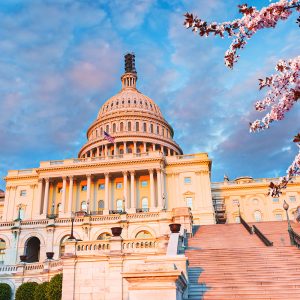
Washington, D.C. is home to agencies like the Environmental Protection Agency, the National Oceanic and Atmospheric Administration, and the Environmental Law Institute. You’ll also have access to policymakers and other professionals dedicated to environmental issues.

Wide Range of Relevant and Fascinating Electives
Explore topics that matter to you through electives like Climate Justice, Coral Reefs and Caves: The Geology of the Bahamas, Science Communication and Policy, Ecotoxicology, and Environmental Consequences of Conventional Energy Generation.

Immersive and International Experiences
Participate in field studies around the country and world, such as: Conservation Biology & Wildlife Management in Montana, Tropical Ecology and Conservation of African Wildlife, Climate Change Adaptation & Development in Nepal, and Natural Resources Sustainability: Field Study in Alaska.
News in Energy Policy, GIS, and the Environment



Ready to Take Action?
Make a meaningful impact with a career in environmental policy with a master’s degree from a renowned research institution.
Contact Us for More Information
Advanced Academic Programs Admissions
Master’s in Environmental Sciences and Policy FAQs
Johns Hopkins University’s MS in Environmental Sciences and Policy program is a 10-course, 30-credit STEM-certified professional master’s degree program – often completed within 12-24 months, though students have up to five years for degree completion. Courses are offered online, in-person, or through a combination of both modalities. An on-site residency is required.
The admissions criteria for the MS in Environmental Sciences and Policy program includes a bachelor’s degree from a regionally accredited U.S. college or university, or an equivalent international credential, with a minimum grade point average of 3.0 on a 4.0 scale. Additionally, this program requires certain prerequisite courses. The application can be completed online and requires supporting materials, including resume, transcripts, and more.
Tuition and fees for the MS in Environmental Sciences and Policy program currently range from $50,650 – $51,550 USD. The cost per course is $5,065; however, field study courses are subject to additional expenses. Students may be eligible to access federal loans, employer tuition assistance, military and veterans benefits, or partner-organization benefits to offset the cost of the degree. Learn more about financial aid options.
Students can select elective courses from across six curated focus areas: Conservation Biology; International Environmental Policy; Sustainability, Environmental Justice and Equity; Climate and Energy; and Remediation, Compliance, and Assessment.
Yes. Students are required to participate in an intensive 1-2 week field study course, covering elements of ecology, geology, conservation, natural resource management, policy analysis, field methods, or sustainability around the country and the world. Students may incur additional costs associated with this experience.