Advancing Women’s Health Through Regenerative Medicine
Published July 8, 2026 | Request Information
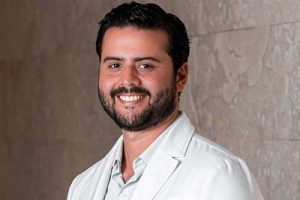 Christian Diaz has delivered hundreds of babies during his training in obstetrics and gynecology. Yet despite spending years helping families welcome new life into the world, he and his wife have faced their own difficult journey with fertility.
That experience – and his wife’s long battle with endometriosis – helped inspire a new direction in his career, one that brought together his lifelong passion for women’s health and a growing fascination with regenerative medicine.
Today, Diaz, a physician, medical director of Auragens Center, and 2026 graduate of Johns Hopkins University’s MS in Regenerative and Stem Cell Technologies program, is exploring how emerging cell therapies may one day transform treatment options for conditions that have long frustrated both patients and physicians.
“For me, these aren’t just theoretical or academic questions,” Diaz said. “I live this every day.”
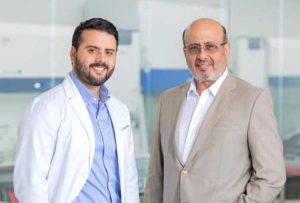
Born and raised in Panama City, Panama, Diaz grew up in a family deeply connected to medicine. His father, Dr. Carlos Diaz, an OB/GYN physician and fertility specialist, was the first physician in the region to successfully perform in vitro fertilization during the late 1980s. As a child, Diaz frequently accompanied his father to the laboratory, observing and counting egg and sperm cells and developing an early fascination with biology and reproductive medicine.
“I was always inclined toward science,” he said. “Medicine was something I saw every day growing up.”
After studying premed/biology at Baylor University, Diaz returned to Panama to attend medical school and complete his clinical training. He worked as a hospitalist at Hospital Punta Pacífica, a facility that also has a Johns Hopkins connection, before joining the country’s largest maternity hospital, where he cared for patients in gynecology and delivered hundreds of babies.
“It is an incredibly gratifying profession,” he said. “Understanding pregnancy is the key to regenerative medicine – nature has already solved our hardest problems. Tissue engineering, immune regulation, anti-inflammation, and regeneration all unfold during the most intimate biological relationship we know: the one between a mother and her child.”
Yet over time, he became increasingly aware of the limitations of many treatments available to women suffering from chronic reproductive health conditions.
One condition stood out in particular: endometriosis.
Throughout his clinical practice, Diaz treated young women whose lives were disrupted by severe pelvic pain, missed work, fertility challenges, and years of delayed diagnoses. At home, he watched his wife endure many of the same struggles.
“I always felt terrible telling patients that their options were limited to surgery, hormone suppression, or temporary pain relief,” he said. “There was never a treatment that truly addressed the underlying problem.”
His search for better answers eventually led him to regenerative medicine and, ultimately, at his wife’s urging, to Johns Hopkins University.
“There is so much happening in this field right now,” he said. “Everything I was reading felt like it was being written in real time.”
At Johns Hopkins, Diaz found a program that allowed him to continue practicing medicine while studying emerging technologies in stem cells, gene therapies, and immunology. Just as valuable were the connections he made with classmates and faculty working at the forefront of biotechnology and translational medicine.
“The program opened doors I didn’t even know existed,” he said. “I gained access to experts in regenerative medicine and biotechnology and connected with peers who are doing remarkable work across the industry. Those relationships have become an invaluable resource.”
For his capstone project, Diaz explored the potential use of mesenchymal stem cells derived from umbilical cord tissue as an immunotherapy for endometriosis. The project grew from treatments he has provided, observations from clinical practice, and his desire to better understand the immune mechanisms that may drive the disease.
“We still don’t fully understand endometriosis,” he said. “I believe it is fundamentally an immune condition that should be approached from multiple angles –psychological, nutritional, immunological. If we better understand what is happening with the immune system in these patients, we may be able to develop therapies that change the course of the disease rather than simply manage symptoms.”
While much more research is needed, Diaz believes regenerative medicine could transform treatment for a wide range of chronic inflammatory and degenerative conditions. Through therapies such as platelet-rich plasma and other orthobiologics, he sees opportunities to help patients preserve function, reduce pain, and potentially slow disease progression through less invasive approaches.
He is equally passionate about educating other clinicians about the field, as physicians receive no training in regenerative medicine during medical school.
“This is a new frontier of medicine,” he said. “Doctors need to understand these therapies and other biologic mechanisms if they are going to feel confident bringing them into clinical practice. The program came at an opportune time for me, and I believe it could benefit many other physicians as well.”
Looking ahead, Diaz hopes to continue advancing regenerative medicine while remaining connected to women’s health and patient care. He also hopes to someday teach future generations of physicians and help expand evidence-based regenerative medicine across Latin America and beyond.
Reflecting on his journey, Diaz sees a connection between the fertility laboratory where he spent time as a child, the maternity wards where he delivered hundreds of babies, and the cell-culture lab and regenerative medicine research he pursues today.
“My path hasn’t been linear,” he said. “But every step has led me here. Johns Hopkins gave me knowledge, but it also gave me optimism. It showed me how much is possible when science, medicine, and curiosity come together. The science is advancing, medicine is changing, and patients need better options. I am proud to be helping build that future from Panama.”
Attention: Students and Alumni
Are you a current AAP student or alumni and want to share your accomplishments?
Interested in pursuing a graduate degree at Johns Hopkins University?
Request information to learn more or apply here.