A Journey Through Resilience and Regenerative Science
Published June 8, 2026 | Request Information
 As a child in Isfahan, Iran, when faced with the news of a family member’s need for a heart transplant, Ava Movahed Abtahi used to cut open her teddy bears, draw replacement hearts, and stitch them back together as a way to give them life.
It was her way of trying to understand how life could be repaired.
Years later, that same curiosity has led Abtahi from Iran to the laboratories of the National Institutes of Health and now through Johns Hopkins University into the emerging worlds of regenerative medicine, biotechnology, and translational research.
Abtahi graduated from Hopkins’ MS in Regenerative and Stem Cell Technologies program in spring 2026 after completing the program in just one year while simultaneously continuing her full-time research position at NIH, teaching biology courses, volunteering as a medical responder, and launching her own biotechnology startup.
It was not the future many people once imagined for her.
“I had an Iranian teacher tell me I would never graduate high school,” she said, “and that the best future I could hope for was to get married very young.”
Immigrating with her parents to Maryland in 2012, Abtahi arrived with no English skills and needed to rebuild her education from the ground up.
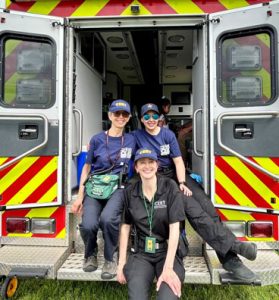
She adapted quickly, attending Montgomery County schools before enrolling at Washington Adventist University, where she earned degrees in biology and interdisciplinary studies during the COVID-19 pandemic.
During that time, she also served as a COVID medical responder and assisted with mass-casualty support efforts for Afghan refugees arriving in the United States. Fluent in Farsi, she became an important bridge for families navigating unfamiliar systems and uncertain futures.
“I saw young girls looking at me and realizing that someone who spoke their language could do this work,” she said. “That meant a lot to me.”
In 2023, Abtahi joined NIH as a post-baccalaureate research fellow under the mentorship of Dr. Shmuel Muallem, chief of the Epithelial Signaling and Transport Section within the National Institute of Dental and Craniofacial Research. There, she began studying the molecular signaling pathways that regulate cellular communication and disease development.
Her research project, which earned top honors at Hopkins, explored the role of Anoctamin 8 (ANO8), a protein involved in calcium signaling and cellular communication. The work examined how disruptions in those signaling pathways may contribute to cancer, neurodegenerative disease, autoimmune disorders, and other serious illnesses.
Understanding those signaling pathways could eventually help researchers develop early diagnostics and more targeted treatments.
“When these signaling systems stop functioning properly, entire tissues and organs can begin to fail,” she said. “Our job is to understand those molecular pathways well enough to eventually control them.”
While completing her Hopkins coursework, Abtahi also navigated a 43-day federal shutdown that threatened access to critical lab resources and experimental data she needed for her research.
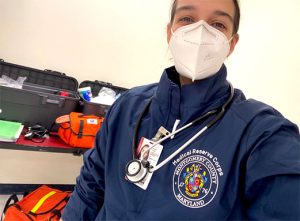
“I was coming into the lab at five in the morning, running experiments, going to class, and returning to the lab until late at night because we knew the shutdown was coming,” she said. “I needed enough data to tell a meaningful scientific story, with a rigor that the program demands.”
During that period, encouragement from Hopkins faculty member Philip Harding pushed her to pursue entrepreneurship sooner rather than later. The result was PhoeniXogen, a Bethesda-based biotechnology startup focused on regenerative medicine and personalized therapies.
“At the moment, it’s a company of one – me, myself, and I,” she said with a laugh, “but I am working on expanding soon.”
Despite her growing role in research and biotechnology, Abtahi still plans to attend medical school and hopes to serve as a military physician, with interests in surgery, trauma medicine, and microsurgery.
“I came to this country with nothing, and this country gave me everything I have today, opportunities I never could have imagined,” she said. “I feel a responsibility to give back to the people and the country that gave me this freedom, without which I would have been nothing.
“I am grateful for the professors, connections, and resources I found at Hopkins,” she continued. “I would tell anyone who is looking to pursue science or medicine to consider Johns Hopkins. If you want to be part of the impact that these fields have, this is where you need to be.”
Outside the laboratory, Abtahi maintains balance through volleyball, martial arts, and participating in obstacle course races.
“You have to take care of your mind, your spirit, and your physical health too,” she said. “You can’t pour into others if you never invest in yourself.”
Looking back, Abtahi says she never carries anger toward those who underestimated her future.
“Their words still stay with me,” she said, “but I forgive them. And if they ever needed me to save their life, I would do it wholeheartedly.”
Attention: Students and Alumni
Are you a current AAP student or alumni and want to share your accomplishments?
Interested in pursuing a graduate degree at Johns Hopkins University?
Request information to learn more or apply here.