Applications Now Open
Master's in Cultural Heritage Management (MA)
MA in Cultural Heritage Management Program Overview
In our fast-paced society, the need to understand where we have come from cannot be overstated. An integrated approach that is both forward-thinking and strategically linked with sustainability, development, and community will be required for heritage management and preservation efforts to succeed.
The past and the present are indispensable to our future, from the built environment of historic sites, monuments, and cities, to full landscapes and the unique biodiversity of natural habitats, to the intangible gems of our global cultures – music, dance, food, dress, craft. We have come to recognize the value of our heritage.
A career in cultural heritage management offers you the chance to protect as well as shape the future of our most precious places and people.
What Is Heritage?
According to UNESCO, the United Nations Educational Scientific and Cultural Organization, “Heritage is our legacy from the past, what we live with today, and what we pass on to future generations. Our cultural and natural heritage are both irreplaceable sources of life and inspiration.”
Heritage is an expansive concept and the reach of heritage is broad embracing sites and monuments, the built environment, urban centers and full landscapes, as well as intangible heritage and the people who embody and preserve these cultural traditions in the present and for the future.
A Quality Education on Your Terms
Our cultural heritage management program embraces a fully inclusive definition of heritage. It’s more than local, regional, and national sites, monuments, and artifacts; it’s also full landscapes, environments, and even the intangible. And we explore it all in a global context.
The online MA in Cultural Heritage Management program is flexible enough to fit your scheduling needs, as well as interactive, providing an enriching learning atmosphere. A two-week onsite study seminar adds a tangible, real-world component to your Johns Hopkins experience.
Specialize Your Studies
The MA in Cultural Heritage Management degree at JHU offers distinct focus areas, giving you the flexibility to tailor your degree to your career interests:
- Cultural Resource Management
- Parks and People
- Outreach and Interpretation
- Global Heritage
Cultural Heritage Management Master’s Student Outcomes
Core Skills Gained in Cultural Heritage Management
A master’s in cultural heritage management gives you advanced knowledge and skills in preservation, research, cultural resource management, interpretation, project management, and the protection of tangible and intangible heritage. JHU AAP’s program examines heritage in a broad context that includes sites, landscapes, artifacts, environments, traditions, and other cultural expressions, while also addressing the use of technology to document and interpret heritage. Heritage professionals must balance preservation with public access, community interests, environmental considerations, legal requirements, and long-term sustainability. Your program also provides an opportunity for hands-on learning through an onsite study seminar where you can apply classroom concepts in a real-world cultural heritage setting.
Cultural Heritage Management Master’s Courses
Below are a few examples of cultural heritage management master’s courses that you can take as part of our program. These courses will help you gain the skills you need to advance in your career and improve your abilities. As part of the program, you will be expected to take required core classes as well as choose from relevant electives to complete your degree.
- Studies in World Heritage
- Cultural Heritage Management/Leadership
- The Protection of Global Cultural Heritage: Laws, Policies, Politics, and Advocacy
- Public Monuments and Collective Memory
- Cultural Heritage in the Digital Age
Explore the MA in Cultural Heritage Management Program

In-Depth Article
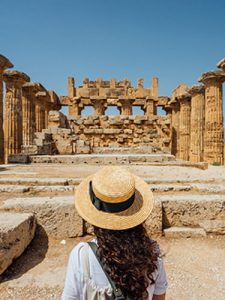
Considering a Career in Cultural Heritage Management?
Dedicated professionals in a wide range of roles, including archaeologists, historians, and park naturalists, among others, engage in the essential work of cultural heritage management.
Master’s in Cultural Heritage Management's Related Events

Why to Pursue a MA in Cultural Heritage Management at Hopkins

A Diverse Faculty With Rich, Real-World Experience
They are archaeologists, anthropologists, curators, and historians. And they’ve worked with places like the U.S. National Parks Service, International Council on Monuments & Sites, Smithsonian Institution, and the Center for Digital Antiquity.

Customizable Curriculum With a Wide Range of Electives
Supplement your foundation in world heritage and cultural management with electives that fit your interests, including offerings from our museum studies, digital curation, and environmental science policy programs.

Immersive Educational Experiences
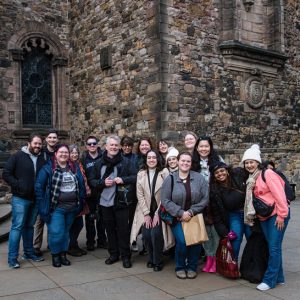
Spend two weeks immersed in a culturally significant location learning from your instructor and heritage professionals. Your experience will include class sessions, daily activities, visits to other sites, and hands-on site management opportunities.
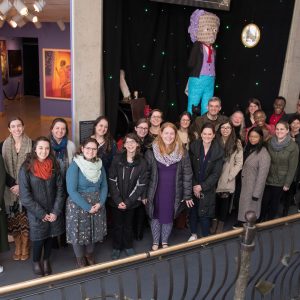
A Community of Heritage Professionals
Our international student body, diverse faculty members, and accomplished alumni provide you with a built-in network of cultural heritage professionals.
Cultural Heritage Management News



Take the Next Step
Start or further your journey into cultural heritage preservation and tourism.
Contact Us for More Information
Advanced Academic Programs Admissions
Cultural Heritage Management Master's FAQs
Johns Hopkins University’s MA in Cultural Heritage Management program is a 10-course, 30-credit professional master’s degree program – often completed within 16-24 months, though students have up to five years for degree completion. This program can be completed 100-percent online.
The admissions criteria for the MA in Cultural Heritage Management program includes a discipline-related bachelor’s degree from a regionally accredited U.S. college or university, or an equivalent international credential, with a minimum grade point average of 3.0 on a 4.0 scale. The application can be completed online and requires supporting materials, including resume, transcripts, and more.
Tuition and fees for the MA in Cultural Heritage Management program currently range from $53,950 – $54,050 USD. The cost per course is $5,305. Students may be eligible to access federal loans, employer tuition assistance, military and veterans benefits, or partner-organization benefits to offset the cost of the degree. Learn more about financial aid options.
Students can choose from four focus areas in: Cultural Resource Management; Parks and People; Outreach and Interpretation; or Global Heritage. Each focus area identifies related customizable core courses and elective courses to help personalize the curriculum.
Yes. While this program can be completed online, students may choose to participate in person during an intensive two-week field study. This distinguishing element provides practical opportunities related to site management, heritage tourism, and conservation alongside classroom sessions that integrate daily experiences.
Depending on focus area, professional experience, and the type of heritage organization a student wants to join, career paths can include roles such as:
- Archaeologist
- Historian
- Curator
- Archivist
- Park naturalist
- Cultural resource manager
- Heritage program manager
- Preservation specialist
- Urban and regional planner
The U.S. Bureau of Labor Statistics reports that archivists, curators, and museum workers had a median annual wage of $57,100 in May 2024, with employment projected to grow 6% from 2024 to 2034. Historians, another potential career path, had a median annual wage of $74,050 in May 2024, with employment projected to grow 2% during the same period.
Below are a few examples of cultural heritage management master’s courses that you can take as part of our program. These courses will help you gain the skills you need to advance in your career and improve your abilities. As part of the program, you will be expected to take required core classes as well as choose from relevant electives to complete your degree.
- Studies in World Heritage
- Cultural Heritage Management/Leadership
- The Protection of Global Cultural Heritage: Laws, Policies, Politics, and Advocacy
- Public Monuments and Collective Memory
- Cultural Heritage in the Digital Age