Linda Kiltz: Growing Nonprofit Impact From Farm to Classroom
Published September 28, 2026 | Request Information
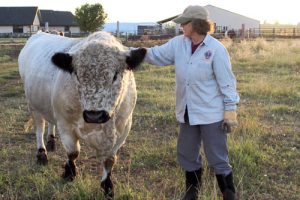 Linda Kiltz has never worked so hard – or been so gratified by her work.
These days, her work in northwest Montana begins before sunrise and often stretches well into the evening. Throughout the day, there are grass-fed Galloway cattle and free-range chickens to tend. There are also 250 hand-planted apple, pear, plum, and cherry trees to care for and fields to maintain on the 22-acre organic farm and ranch she runs with her husband near Kalispell. In the evening, there are courses to teach as part of the Johns Hopkins MA in Nonprofit Management program.
Yet after a career that has taken her from the U.S. Army and law enforcement to government, higher education, and nonprofits, Kiltz says the combination of farming while also teaching and mentoring nonprofit leaders has brought her the most profound sense of fulfillment.
When the farm was started in their 50s, Kiltz knew little about farming. So she immersed herself in learning, studying everything from poultry and cattle to soil science, botany, veterinary care, and even tractor repair. She became a master gardener and orchardist, took veterinary technician classes, and learned the science behind raising animals and growing food using sustainable practices.
“I didn’t know anything. I spent more time learning about farming than all of my years I devoted to writing my PhD dissertation,” she said with a laugh.
The farm follows organic principles, minimizes its carbon footprint and uses solar power. But perhaps most importantly to Kiltz, it is helping restore the health of the land.
“When we started the farm, my number one goal was to increase the organic matter in the soil,” she said.
Her long-term measure of success is simple.
“If all that is left here when I am gone is 22 acres of super healthy soil for other people to grow lots of food, that is a score for the Earth,” she said.
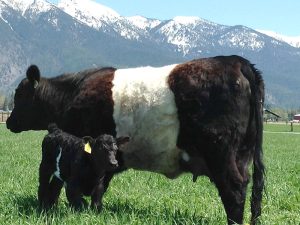
Much of what she raises is donated to local organizations, including the Big Fork Food Bank and Land to Hand, a nonprofit that provides food for schoolchildren on weekends. She also donates beef to a local nonprofit’s fundraising efforts.
“The most important thing this farm has done for me is that it has linked my family directly back to the community in a service-oriented way,” she said.
That same commitment to service is at the heart of Kiltz’s work as a faculty member at Johns Hopkins. She has helped develop courses in leadership and ethics, as well as human resources and volunteer management, and twice has earned the program’s Excellence in Teaching Award.
For Kiltz, teaching nonprofit management is another way to help people turn their skills and experience into purposeful service.
Her own professional path began with military service. After growing up in Wisconsin and attending the University of Wisconsin–Madison on an ROTC scholarship, she became an Air Defense Artillery officer and served during the Cold War, including in Germany.
The experience gave her an early education in leadership, responsibility, and systems thinking.
She later worked in local law enforcement, local government, and nonprofit organizations, including organizations focused on preventing family violence. She earned a PhD in public administration from Portland State University and became one of the early scholars researching homeland security and the relationship between homeland security policy and emergency management after 9/11. Her research on homeland security ultimately led to a textbook.
Over more than two decades, Kiltz has developed and implemented programs and policies addressing challenges ranging from crime and violence to poverty, hunger, and emergency management among vulnerable populations.
Today, she remains active in nonprofit work. She is involved with an organization constructing a home and training center for adults with developmental disabilities and another nonprofit building a hospice facility that would provide care at no cost to rural Montana residents. These efforts, she said, will allow people in her adopted home state to live – and die – with dignity.
Kiltz brings that wide-ranging experience to Johns Hopkins students who also want to use their professional experience to serve others. Some arrive with years of nonprofit experience. Others come from business or other careers and are looking to transition into more meaningful work.
“We have executives from the business sector who throw up their hands and tell us, ‘I’m tired of this. I want to use my knowledge and skills to start up a nonprofit or work on a board or be an executive in a nonprofit so I can help my community’,” she said.
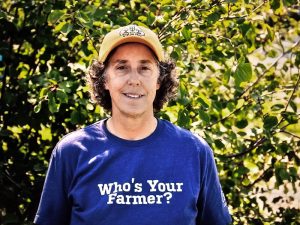 Kiltz welcomes them with open arms – but also with a healthy dose of reality about the challenges of the field.
The challenges are many, she explained, because nonprofits – just like businesses – must navigate complex regulations, human resources, strategic planning, finance, and operations while relying on funding sources such as individual donations, grants, and foundations that can be unpredictable from month to month and year to year.
“Nonprofits don’t sell a product,” she said. “They provide valuable services that oftentimes businesses and governments are unable to provide. The benefit of being in the nonprofit community is that you get to see the interconnectedness of people and the impact of your work. But it is also a tough job because of the constant changes in funding streams and the increasing need for nonprofits to fill in the gaps of necessary resources and services.
“I think the mission of nonprofit management is just a really important mission for Johns Hopkins,” she continued. “To watch these students learn, grown, find their purpose, and give back to their communities is quite amazing and phenomenal.”
After a lifetime spent serving others, Kiltz has found that purpose can take many forms.
Sometimes, it looks like a classroom.
Sometimes, it looks like a farm.