Planting the Seeds of a Milk Revolution
Published September 28, 2026 | Request Information
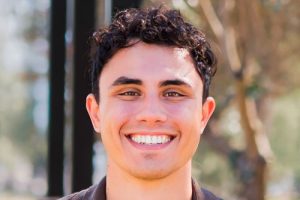 Meet Maia Silva, the self-described modern-day milkman.
His milk doesn’t come from a cow – or an almond, oat, or soybean. It comes from watermelon seeds.
The 2022 graduate of the Johns Hopkins MS in Regulatory Science program is the founder and CEO of MILKish, which he markets as the producer of world’s first watermelon seed milk. What began as an experiment in his kitchen blender has grown into a fledgling food brand now sold in more than 125 retail locations in California and served in cafés across the country.
“I’m living my dream,” Silva said. “I have enjoyed swimming in these entrepreneurial waters, and it is something I will definitely do for a long time.”
Silva’s path to MILKish began far from the grocery store shelf.
Born in Brazil, he moved with his family to Asia when he was 10, spending time in Thailand, India, and China before arriving in St. Louis, Missouri, as a high school sophomore. His father, who spent his career in agriculture and supply chain management, became an early influence.
“I thought it was a crazy concept that your food gets grown in these remote places and farms all over the world and the product is conveniently packaged in your grocery store,” Silva said. “It is a really cool process.”
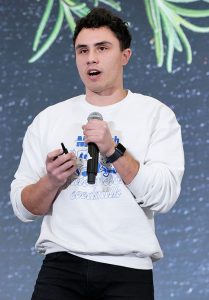
He followed that interest to the University of California, Davis, where he earned a bachelor’s degree in plant sciences with an emphasis on crop production. After graduation, he worked in the food and beverage industry, including in quality assurance and plant operations, gaining firsthand experience with product development, manufacturing, food safety, and regulatory compliance.
Then came Johns Hopkins.
While working full-time and pursuing his master’s degree, he began exploring the idea of starting a food company of his own. JHU’s graduate program gave him both the technical foundation and entrepreneurial encouragement to pursue it.
One course in particular helped him think beyond food safety and toward building a consumer brand, teaching him about entrepreneurship, branding, fundraising, and developing a company philosophy. Other coursework in FDA regulations and food toxicology gave him a deeper understanding of the regulatory requirements involved in bringing a food product to market.
For Silva, the combination of the program’s offerings and faculty expertise proved transformative.
“My biggest advice to anyone considering this program at Hopkins is to go into it with the mindset that you’re not just there to learn the curriculum,” he said. “You need to make a deep connection with professors and classmates. They will further your career.”
Among the faculty members who supported his journey, Silva benefited from Ron Rudnick’s course on funding new ventures and his personal interest proved instrumental in launching Silva’s business. He also points to the impact of food scientist Kantha Shelke who advised him on regulatory issues and FDA claims during MILKish’s early development.
The idea for the product itself emerged in Silva’s kitchen.
At the time, he was drinking almond milk and had become increasingly interested in the environmental impact of agriculture. After touring almond orchards and seeing how much water the crop requires, he began looking for an alternative that could offer comparable nutrition with a smaller environmental footprint.
He started experimenting with watermelon seeds in his kitchen, concocting different flavor profiles and even roasting the seeds.
The experimentation eventually led to a much bigger undertaking: developing a watermelon seed beverage that could be safely produced, bottled, and sold.
It took about a year and a half to transform the kitchen experiment into a commercial product. Without a food science degree, Silva sought out food scientists and beverage developers, collaborating with them to refine the formulation, nutritional profile, taste, and pasteurization process. He eventually found angel investors, as well as manufacturing and distribution partners, to help bring the product to market.
MILKish officially launched in September 2024.
The result is a shelf-stable, dairy-free, vegan milk alternative made from watermelon seeds. Available in original and vanilla, MILKish contains zero grams of sugar and can be used in everything from coffee and matcha to cereal, smoothies, and baking. The company touts watermelon seeds for their protein, magnesium, zinc, healthy fats, and other nutrients, as well as their lower water footprint compared with several conventional plant-based milk ingredients.
Silva sees that environmental advantage as central to the brand’s mission.
“Water scarcity is one of the biggest limiting factors to our global food supply,” he said. “We’re championing watermelon seeds as the next ingredient that is going to take the world by storm.”
The response has been encouraging. MILKish took the fan-favorite award in the Fancy Face-Off pitch competition at the 2025 Winter Fancy Food Show, and brand awareness continues to grow.
For Silva, seeing the product in a grocery store remains surreal.
“When I saw it in a grocery store for the first time, I had to pull it off the shelf and buy it because I couldn’t believe it was even there,” he said. “It was a surreal moment for me as the founder to see what started in my kitchen sitting on a grocery-store shelf.”
There is still plenty of work ahead. Silva and his small team are focused on expanding distribution and introducing MILKish to more consumers. International expansion – including potentially bringing the product to Portuguese- and Spanish-speaking countries – is part of the ambitious, long-term vision.
“You can never fully prepare to run your own business and to wear every single hat, from product development and regulatory compliance to marketing, partnerships, and retail,” Silva said. “But at the end of the day, this work, as a professional and human being, has made me much more of an elevated version of myself than I could have ever asked for.”
Four years after graduating from Johns Hopkins, Silva is still applying lessons from the classroom to his entrepreneurial journey – one watermelon seed at a time.
“I never intended to be an entrepreneur,” he said. “But I had all these ideas of amazing products that I thought people would like and that could make a positive impact in terms of environmental sustainability. It has been a lot of work, but it has definitely been the most rewarding experience of my life.”
Attention: Students and Alumni
Are you a current AAP student or alumni and want to share your accomplishments?
Interested in pursuing a graduate degree at Johns Hopkins University?
Request information to learn more or apply here.