Steven Payson: Economics From a Public Servant’s Perspective
Published September 29, 2026 | Request Information
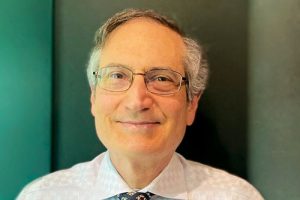 Ask Steven Payson which of his many government jobs was his favorite, and he is reluctant to choose.
“It’s kind of like, you know, which child do you like more?” he laughed. “It’s kind of a trick question. You feel guilty.”
After more than 33 years as an economist in the U.S. federal government, Payson has worked across a wide range of agencies and missions – from labor and immigration to natural resources, scientific research, agriculture, and economic measurement. Now, as a program coordinator and senior lecturer in the Johns Hopkins MS in Applied Economics program, he draws on that experience to give students something they cannot get from a textbook alone: a dynamic view of economics as it operates in the real world.
For Payson, that perspective begins with a deceptively simple question: What is economics really about?
“It’s not just about money,” he said. “It’s about how people, organizations, and societies make choices when resources are limited.”
Those limitations can be financial, but they can also be related to time, labor, land, energy, information, technology, or natural resources. Economists study how those limited resources are allocated – and the consequences those choices have for individuals and society.
Payson became interested in economics almost by accident. Growing up in Highland Park, New Jersey, he was drawn to mathematics and the sciences. As an undergraduate at Wesleyan University, he studied mathematics and biopsychology and considered fields ranging from physics to biology. It wasn’t until the final semester of his senior year that he took his first economics course.
Something clicked.
“I think what got me hooked was just the sheer importance of the topic,” he said. “How many people’s lives depend on how well they’re doing in the economy.”
His mathematical background also drew him to the field. After graduating, he took additional economics courses at George Washington University before earning his MSc in economics from the London School of Economics and then a doctorate in economics from Columbia University.
His career began in consulting before he entered federal service, where he would spend more than three decades working as an economist and senior economic adviser.
During his extensive career, Payson served at the U.S. Department of Agriculture, National Science Foundation, Department of Commerce’s Bureau of Economic Analysis, Department of the Interior, Department of Homeland Security, and Department of Labor, among others. He spent nine years at the Bureau of Economic Analysis and seven years at both the Department of the Interior and National Science Foundation.
“I’ve seen a lot of what the government does in many different agencies and many different contexts,” he said. “Public economics was the world I lived in.”
That experience taught him that the work of an economist can look very different depending on the mission. At the Bureau of Economic Analysis, Payson worked on measuring the government sector of the economy. At other agencies, he evaluated policies, conducted cost-benefit analyses, studied labor issues, and examined the economic implications of government decisions.
His final federal assignment brought together his interests in economics and public policy. On detail to the Department of Labor’s Bureau of International Labor Affairs, Payson worked on efforts to address violations of international labor rights, including forced labor and human trafficking, and on policies aimed at preventing goods produced through such violations from entering the United States.
The experience reinforced something he had learned throughout his career: economics is never simply an exercise in numbers.
That idea is central to Payson’s recent book, Guidelines for the Responsible Practice of Economics, which presents 36 guidelines for economists, students, educators, and practitioners.
Among its foundational principles are recognizing the responsibility that comes with being an economist, doing no harm, acting with honor and integrity, and maintaining scientific and intellectual honesty.
“It’s very important that you believe that you’re doing the right thing in economics,” he said.
For Payson, responsibility extends beyond ethics. It encompasses an economist’s broader obligation to pursue useful knowledge, question assumptions, communicate honestly, and consider how economic analysis affects other people. He considers seeking the truth a “moral imperative.”
“You’re going to have an impact on society,” he said. “It should reflect what you honestly believe you’re doing.”
That philosophy also shapes his teaching at Johns Hopkins.
Payson teaches courses in public economics, cost-benefit analysis, development microeconomics, and international trade – subjects that closely connect to his professional experience. His years in government allow him to supplement traditional economic theory with examples from the policies, programs, and institutions where those theories are applied.
“I can draw upon my experience,” he said. “I still teach the standard economics, but I also give examples or explain things that the textbooks may not get right or may not know.”
He frequently supplements his lectures with current material because the economic landscape – and the questions economists are being asked to answer – can change faster than textbooks can keep up.
He also wants students to understand that being an economist requires more than mastering mathematical models.
“You can’t do economics unless you have a good understanding of math,” he said. “But you also have to have a good understanding of human behavior.”
Psychology, he argues, is essential to understanding how people actually make economic decisions rather than how theoretical models assume they make them. Economists working in specialized areas should also understand the science, technology, or other disciplines underlying the questions they analyze.
And above all, Payson wants students to think independently.
“If an idea is good, it’s because you think it’s a good idea,” he said. “Not because some really famous economist said it, and not even because your professor said it.”
That independent thinking is becoming even more important as artificial intelligence transforms both the practice of economics and the economy itself.
AI, he says, is likely to change virtually every economist’s work, from research and data gathering to the development and application of economic models. It may make individual economists and research teams more productive, but it also raises larger questions about employment and how the benefits of increased productivity are distributed.
If automation eventually makes it possible to produce far more goods and services with far less human labor, Payson asks, what happens to the people whose work is displaced? And how is the resulting wealth distributed? What kinds of work will remain? And what role should government play?
Those questions, he says, are part of what keeps him engaged in economics – and what he believes makes economists more important, not less.
They are also part of what he hopes students carry with them after leaving Johns Hopkins: the ability to look beyond a model or equation and ask what it means in the real world.
For Payson, that is ultimately what makes economics such a consequential profession.
“Economics helps explain who has access to resources, why some people prosper while others struggle, and how decisions made by governments, businesses, and individuals shape the opportunities available to billions of people,” he said.
In that sense, he sees economists as playing a role unlike that of many other professions.
“Economics is very unique in one way,” he said. “Economics provides the intellectual foundation for how wealth is distributed in our society.”
That gives economists an enormous responsibility, he believes, because their analysis can influence decisions that affect people’s livelihoods and even their lives.
“Economics is the referee in the game of life,” Payson said.
And if economists are going to serve as referees, Payson believes they have an obligation to understand the rules, question the assumptions, and – above all – call the game honestly.